PocketCards.net

 Aktualisiert 24. Juli 2026
Terapagos ex Deck-Guide in Pokémon TCG Pocket
Lade ein widerstandsfähiges Basic mit mehreren verschiedenen Energietypen und lass Prism Impact auf 140 Schaden klettern
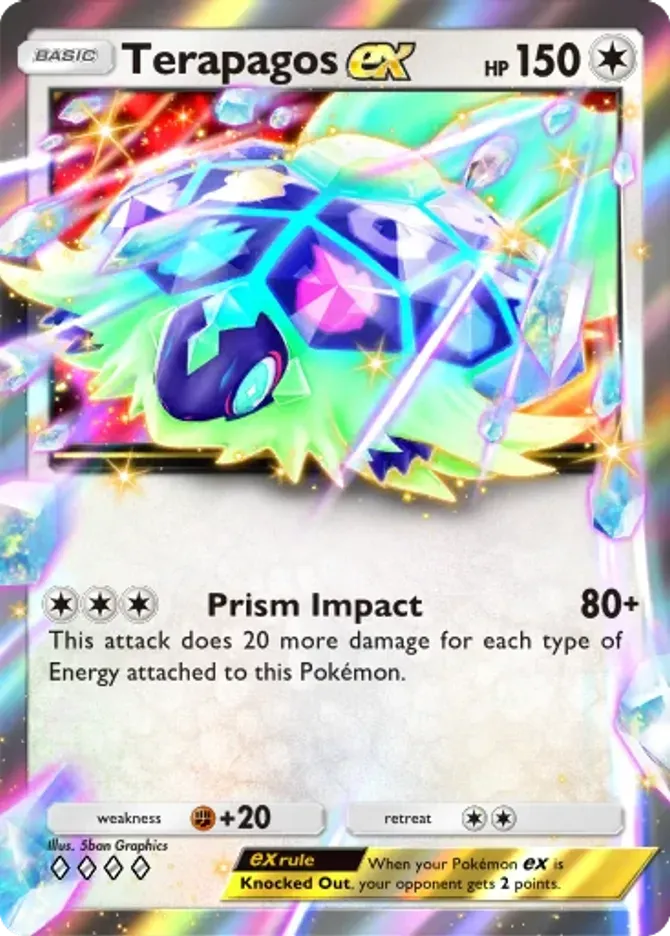
Terapagos ex ist im reinsten Sinne ein Ein-Pokémon-Deck: zwei Kopien eines einzigen Basics mit 150 KP, gestützt von achtzehn Trainerkarten, die es finden, schützen und am Zuschlagen halten. Prism Impact belohnt dich dafür, verschiedene Energietypen aus deiner Energiezone anzulegen, also registriert das Deck mehrere Energietypen und verwandelt diese Vielfalt in zusätzlichen Schaden. Es ist einfach zu lernen, schwer zu besiegen und täuschend tief zu pilotieren.
Die Deckliste

So funktioniert es
Terapagos ex ist deine gesamte Offensive, ein Basic mit 150 KP, dessen Prism
Impact Farblos
FarblosFarblos kostet und 80 Schaden plus 20 mehr für jeden an
ihm angelegten Energietyp macht. Da die Kosten vollständig
Farblos sind, kann jede Energie, die deine Energiezone
produziert, sie bezahlen, also registrierst du beim Deckbau drei verschiedene
Energietypen, zum Beispiel  Pflanze,
 Wasser und
  Psycho. Wenn die drei
angelegten Energien drei verschiedene Typen sind, trifft Prism Impact für 140,
und zwei verschiedene Typen geben immer noch 120. Seine Schwäche gegen
Psycho. Wenn die drei
angelegten Energien drei verschiedene Typen sind, trifft Prism Impact für 140,
und zwei verschiedene Typen geben immer noch 120. Seine Schwäche gegen
 Kampf bedeutet, dass diese Angreifer 20 extra Schaden
hinzufügen, was deine schlimmsten Matchups prägt.
Kampf bedeutet, dass diese Angreifer 20 extra Schaden
hinzufügen, was deine schlimmsten Matchups prägt.
Giant Cape ist eine Pokémon-Ausrüstung, die dem Pokémon, an dem sie angelegt ist, 20 mehr KP gibt, und das Deck spielt beide Kopien, sodass früh meist eine verfügbar ist. Auf Terapagos ex macht das aus einer 150-KP-Mauer eine 170-KP-Mauer, was zusammen mit Potion etliche Zwei-Treffer-Knock-outs in drei schiebt. Die entscheidende Regel, die du verinnerlichen musst: eine Ausrüstung ist keine Energie. Der Umhang zählt nie für Prism Impacts Typ-Bonus, und dein Schaden kommt vollständig aus dem, was die Energiezone angelegt hat. Denk daran, dass dein Gegner sie entfernen kann, genau wie deine eigenen Guzma und Field Blower gegnerische Ausrüstungen bestrafen.
Die Zieh- und Suchmaschine ist schlank, aber zuverlässig. Professor's Research zieht einfach 2 Karten, Poké Ball legt ein zufälliges Basic aus deinem Deck auf deine Hand, was hier nur Terapagos ex sein kann, und Pokémon Communication tauscht eine überzählige Kopie von deiner Hand gegen ein zufälliges Pokémon aus dem Deck. Iono lässt jeden Spieler seine Hand ins Deck mischen und so viele Karten ziehen, was eine tote Hand für dich auffrischt oder einen Gegner stört, der auf einer vollen sitzt. Mit nur zwei Pokémon in zwanzig Karten existieren diese Effekte, um einen Angreifer in Zug eins zu garantieren.
Die defensive Hülle ist das, was einen Angreifer ein ganzes Spiel tragen lässt. Potion heilt 20 Schaden auf Abruf, Big Malasada heilt eine kleine Menge von deinem Aktiven Pokémon und entfernt seine Spezialzustände, und zusammen schieben sie Terapagos ex routinemäßig aus der Zwei-Treffer-Knock-out-Reichweite. Sabrina schiebt das geladene Aktive Pokémon des Gegners auf die Bank, wobei der Gegner den Ersatz wählt, und kauft dir so einen Zug gegen eine tödliche Bedrohung. X Speed senkt Terapagos exs Rückzugskosten von 2 um 1, was es viel günstiger macht, eine verwundete Kopie gegen die frische auszutauschen.
Matchups
| Matchup | Ausgangslage | So spielst du es |
|---|---|---|
| Bellibolt ex und Magnezone | Vorteilhaft | Ihre Phase-2-Linie braucht mehrere Züge, bevor sie irgendetwas bedroht, und ein frühes Prism Impact kommt zuerst. Nutze Sabrina, um ein halbfertiges Teil in die Aktive Position zu ziehen und es zu entfernen, bevor ihr Board online geht. |
| Gourgeist und Houndstone | Ausgeglichen | Das Punkterennen läuft hier gegen dich: jedes Terapagos ex, das sie besiegen, ist 2 Punkte wert, während ihre Nicht-ex-Angreifer dir nur je 1 geben, also brauchen sie zwei Knock-outs und du drei. Gewinne stattdessen über Tempo, indem du Giant Cape und Potion stapelst, sodass der erste Knock-out nie pünktlich kommt. |
| Giratina ex und Darkrai ex | Ausgeglichen | Dies ist ein reines Schadensrennen zwischen Basics, und ihr passiver Chip-Schaden zehrt an deinem Heilpolster. Timing Iono für den Moment, in dem sie eine große Hand halten, und nutze X Speed, um dein zweites Terapagos ex einzuwechseln, bevor das erste fällt. |
| Flutter Mane ex und Mega Gardevoir ex | Nachteilig | Ihr roher Schaden bleibt unter deiner 140-Decke, aber Fantasia Force legt bei jedem Schlag 3 Psycho Energie aus der Energiezone an, was ihr Board schneller hochfährt, als du heilen kannst, während zwei Knock-outs auf deinen ex-Pokémon das Spiel beenden. Setze die Mega-Linie früh mit 140-Schaden-Schlägen unter Druck, und denk daran, dass das Besiegen ihres Mega ex 3 Punkte wert ist und sofort gewinnt. |
| Koraidon ex und Darkrai | Stark nachteilig | Jeder Kampf Angriff landet 20 extra Schaden auf Terapagos ex, also spielt deine Heilung kaum eine Rolle. Führe mit Sabrina, um ihr Tempo zu brechen, halte Big Malasada bereit und akzeptiere, dass du darauf angewiesen bist, dass sie ihren Aufbau verstolpern. |
Tech-Optionen und Tauschmöglichkeiten
Red Card zwingt deinen Gegner, seine Hand ins Deck zu mischen und 3 Karten zu ziehen, eine günstige Art, einen Zug zu zerschlagen, den er aufgebaut hat. Die saubersten Tauschmöglichkeiten bleiben innerhalb der Liste: ein zweites Iono, wenn deine Ladder gierige Hände bestraft, eine zweite Sabrina gegen Decks, die einen großen Angreifer aufladen, oder ein zweites Guzma und Field Blower, wo Ausrüstungen und Stadien verbreitet sind. Big Malasada verdient seinen Platz überall dort, wo Spezialzustände oft auftauchen, ist aber der nächste Schnitt in einem Feld aus rohem Schaden.
So pilotierst du das Deck
- Deckaufbau: registriere drei verschiedene Energietypen für deine Energiezone, denn der ganze Schadensplan hängt von der Vielfalt ab. Da die einzigen Angriffskosten des Decks reines Farblos sind, gibt es keinen Nachteil.
- Zug eins: eine Starthand mit Terapagos ex oder Poké Ball stellt dich gut auf. Wenn du anfängst, bekommst du in Zug eins keine Energie aus der Energiezone, also nutze diesen Zug, um deinen Angreifer zu platzieren und mit Professor's Research zu graben.
- Frühe Züge: lege deine eine Energie pro Zug aus der Energiezone jeden einzelnen Zug an das Aktive Terapagos ex an. Als Zweiter kann es bis Zug drei FarblosFarblosFarblos bezahlen, als Erster bis Zug vier, und Prism Impact macht dann zwischen 100 und 140, je nachdem, wie viele verschiedene Typen ankamen.
- Mittelspiel: lege das zweite Terapagos ex auf die Bank, sobald du es findest, und beginne, es mit Energie zu füttern, sobald die Aktive Kopie gesund oder voll geladen ist. Nutze Potion und Big Malasada, um die Zwei-Zug-Knock-out-Rechnung des Gegners zu brechen, statt reflexartig zu heilen.
- Rotation: wenn die Aktive Kopie in Knock-out-Reichweite fällt, spiele X Speed, sodass ihre Rückzugskosten von 2 zu 1 werden, ziehe zurück und präsentiere die frische Kopie. Der Gegner steht nun einer zweiten 150-KP-Mauer gegenüber, während du die erste weiter heilst.
- Abschluss: das Besiegen eines normalen Pokémon bringt 1 Punkt und ein ex bringt 2, also richte Sabrina und deine größten Prism-Impact-Züge auf ex-Ziele, um schneller 3 Punkte zu erreichen. Spare Iono für einen Zug, in dem deine Hand schlecht und ihre voll ist.
- Zu vermeidende Fehler: Giant Cape zu Prism Impacts Bonus zu zählen, da Ausrüstungen nie Energie sind; Red Card zu verschwenden, wenn die Hand des Gegners schon klein ist; und beide Potion früh abzuwerfen, wenn der Gegner noch keinen echten Angreifer eingesetzt hat.
Stärken des Decks
- Ein Angriff beantwortet alles, also gibt es keine unbeholfenen Züge des falschen Angreifers
- 150 KP plus Giant Cape und wiederholte Heilungen machen Terapagos ex ungewöhnlich schwer in zwei Treffern zu entfernen
- Prism Impact erreicht 140 mit drei verschiedenen Energietypen, genug, um die meisten Basic-ex-Angreifer zu besiegen
- Poké Ball kann immer nur Terapagos ex holen, was den Aufbau in Zug eins extrem konstant macht
- Sabrina, Iono, Guzma und Field Blower geben der Trainer-Hülle echte Störung gegen Ausrüstungen, Stadien und große Hände
Schwächen des Decks
- Die Schwäche gegen Kampf schenkt jenen Decks bei jedem Angriff 20 gratis Schaden
- Beide Pokémon sind ex, also gibt jeder Knock-out, den du zugestehst, 2 der 3 Punkte des Gegners her
- Prism Impacts Bonus hängt davon ab, welche Energietypen die Energiezone gerade liefert, also deckeln manche Züge bei 100 oder 120
- Mit nur zwei Pokémon insgesamt beendet der Verlust beider Kopien das Spiel sofort
Lohnt sich der Bau?
Ja, besonders für neuere Spieler. Das Deck verlangt genau eine seltene Karte in zwei Kopien, spielt einen klaren und verzeihenden Spielplan und lehrt Energiezonen-Management, Heilmathematik und Punktetausch besser als fast alles andere. Erfahrene Piloten werden das Störpaket und die kniffligen Rotationsentscheidungen zwischen den beiden Kopien schätzen. Solange Kampf Decks nicht überall auf deiner Ladder sind, ist Terapagos ex eine robuste, günstige Liste, die echte Spiele gewinnt.